
Mega-Casinos Dominate Everything.
Shady Operators Hide in Plain Fucking Sight.
This is not a story about "licensed vs. unlicensed." It's about power, visibility, regulatory arbitrage, and where the real scammers operate with near-impunity. Big operators plaster their brands on stadiums. Small-time operators rebrand faster than regulators can type a takedown notice. Both exploit human vulnerability. One just does it with better lawyers and bigger marketing budgets.
- No office. No real customer support. No independent RNG audits that mean anything. No intention of long-term operation.
- The real predatory vector? The long tail of influencers, TikTok "reviewers," YouTube channels, and micro-creators.
- Before depositing, cross-check the exact domain and license number on the regulator's official public register. If it's not there or details don't match, walk away. Screenshots of "license" images on the casino's own site mean nothing.
The Money Is Disgusting – Why Big Casinos Win
The numbers are obscene, and that's the point.
Bet365 reported group revenue of approximately £3.72 billion for FY ending March 2024, rising further to around £4 billion in 2024/25. Sports and gaming revenue alone hit £3.7 billion in one recent year.
William Hill (now under Evoke plc) contributes to a group reporting £1.78 billion in revenue for FY25, with a vast retail footprint historically exceeding 295 locations across the UK.
FanDuel, DraftKings, Betfair (Flutter), Betway, Betano, Superbet operate at similar scales. These are institutional-backed behemoths with private equity, public listings in some cases, and access to capital markets.
Small Casinos = Scammer Playground (The Shit Nobody Talks About)
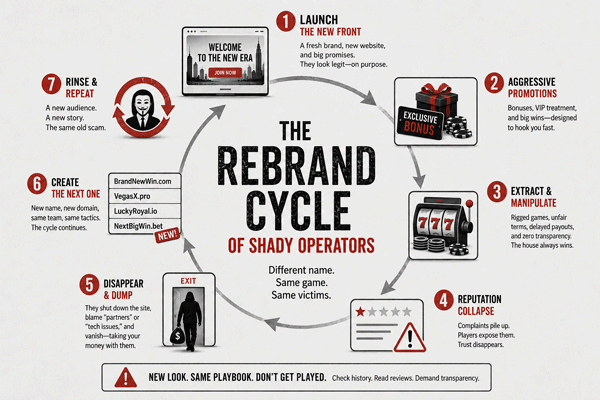
The barrier to entry for a "casino" in 2026 is laughably low if you have no intention of paying winners.
You need: A white-label platform, a domain (or 50 of them), a Curaçao "license" (or claim of one), crypto payment rails, and affiliate networks hungry for commissions.
The rebrand cycle is fucking endless and brutally effective. An operator gets heat - player complaints pile up, regulator issues warnings, payment processors drop them. What happens next? They spin up a new domain, slap on a fresh coat of paint, maybe change the name slightly, and relaunch. Same backend. Same rigged RNG. New affiliate push.
LATAM: Where Regulation Is Often A Fucking Joke (But Improving in Spots)
In all three markets: Demand exists. Legitimate frameworks lag or are under-resourced. Offshore operators (big and small) fill the vacuum. Big international brands try to navigate or lobby for legalization. Pure scam operations treat the entire region as a low-risk extraction zone.
Football Influencers = Modern Snake Oil Salesmen
Major licensed operators sign proper commercial deals with football clubs, leagues, and high-profile athletes (Neymar Jr. as cultural ambassador for PokerStars). These come with legal review, brand guidelines, and responsible gambling messaging requirements. Big money, big reach, relatively professional execution.
Shady operators pay affiliate commissions (CPA or revenue share) to anyone who can drive deposits. The incentives are perverse:
- Channels post "honest reviews" or "winning streaks" with zero independent verification.
- "No deposit bonuses" or "guaranteed systems" that lead players straight to rogue sites.
- Targeting young men and teens via algorithm-friendly short-form content.
- No meaningful disclosure of commercial relationships in many cases.
- Fake testimonials and edited win screenshots.
YouTube and TikTok are full of gambling content that regulators struggle to police at scale. Affiliate networks act as middlemen, often washing their hands of due diligence. When a site goes down or players get burned, the influencer moves to the next offer. Zero liability.
The big operators can include clauses and compliance checks. The bottom-feeders work with whoever generates traffic fastest, no questions asked. This is how minors and problem gamblers get funneled into environments with no player protection whatsoever.
How to Spot the Difference (Red Flags Checklist)
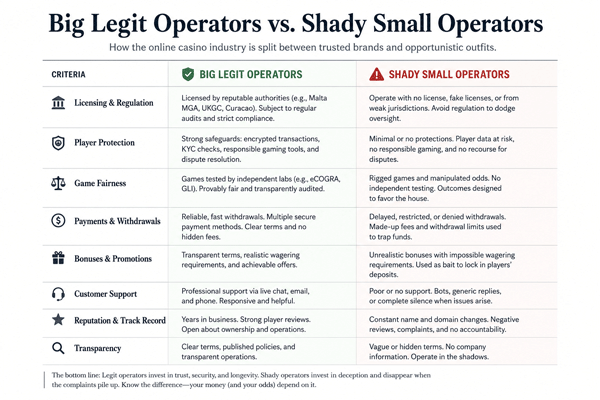
- Multiple licenses from reputable regulators (UKGC, MGA, etc.). Verify directly on official registers.
- Well-known brand with years of operation and institutional backing.
- Professional customer support with documented escalation paths.
- Published terms, independent audits, and participation in self-exclusion schemes like GAMSTOP.
- Still exercise caution: Aggressive marketing, complex bonus terms, data-driven targeting of high-risk players, and the fundamental house edge remain.
- License claims from obscure or low-oversight jurisdictions (generic "Curaçao license" hard to verify, Vanuatu, Seychelles, etc.).
- No verifiable, responsive customer support or support that ghosts after deposit.
- Withdrawal problems or endless KYC loops after wins - the #1 player complaint red flag.
- Frequent domain or brand changes (check historical WHOIS or Wayback Machine).
- "Too good to be true" odds, bonuses, or win rates that defy probability.
- Heavy reliance on unregulated affiliate traffic and social media promotion without proper disclosures.
Before You Deposit Anywhere - Quick Filter
- License verifiable on official regulator register (UKGC / MGA)
- Well-known brand with years of operation
- Professional support with escalation paths
- Clear terms + participation in self-exclusion schemes
- Obscure jurisdiction license claims hard to verify
- Support ghosts after deposit or after wins
- Withdrawal problems or endless KYC loops
- Frequent domain/brand changes
- "Too good to be true" bonuses or win rates
- Heavy unregulated affiliate + social media promotion

Financial analyst specialized in reviewing bonus terms and payment methods in online casinos across Latin America.
LinkedInView profile →Disclaimer: This article is intended for informational and journalistic purposes only. It does not constitute financial, legal, investment, or gambling advice. Gambling carries a significant risk of loss and can be addictive. The author and publisher assume no liability for any decisions made based on this content. Readers should conduct their own independent research, consult licensed professionals where appropriate, and gamble only within their means - or not at fucking all. Links were accurate at time of publication; regulatory landscapes evolve rapidly.