Gambling Isn't Entertainment.
It's Neurological Warfare.
Casinos don't want you to win - they want you hooked, broke, and coming back until there's nothing left. They hire neuroscientists, psychologists and game designers specifically to exploit your brain's weaknesses. This isn't accidental. This is deliberate, calculated, and fucking evil. And it works on millions of people every single day.
- Slot machines are neurologically almost as potent as cocaine - but completely legal and available 24/7.
- This is the same brain chemistry as hard drugs. Casinos know it and design everything around it.
- These biases aren't bugs in your thinking. They're features casinos deliberately target.
- fMRI studies show problem gamblers have reduced activity in decision-making areas and hyperactive reward regions. These changes can persist long after you stop.
Dopamine Isn't Pleasure. It's Fucking Addiction
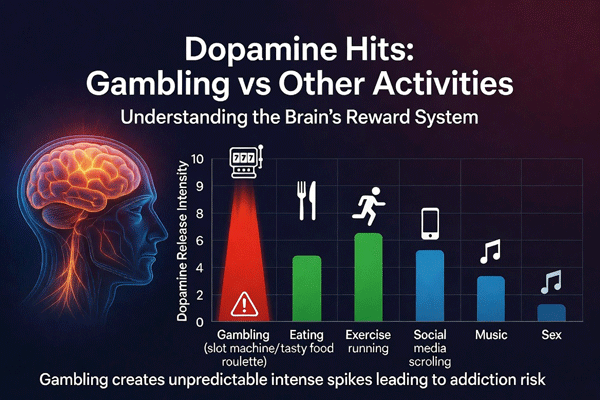
The truth casinos don't want you to know is that dopamine doesn't just make you happy. It makes you crave. When you gamble, your brain releases dopamine before you even know the outcome - on the anticipation alone. This creates a vicious feedback loop: your brain wants the hit, so it demands more gambling to get it.
Compare this to other highs:
- Cocaine causes a massive 1,000% dopamine surge.
- A big lottery win might hit 400%.
- A slot-machine near-miss? Around 350%.
- A normal pleasurable experience like sex or a good meal? Just 50%.
Here's how addiction develops in your brain:
- Week 1: The dopamine spikes feel amazing. "This is fun," your brain says.
- Week 4: Receptors start downregulating. You need more gambling for the same hit.
- Week 12: Your reward system is rewired. Dopamine only really flows from gambling now.
- Month 6+: You're addicted. Stopping brings withdrawal identical to heroin: crushing anxiety, depression, irritability, insomnia, and obsessive thoughts about gambling.
They Deliberately Exploit Cognitive Biases
(Making You Stupid On Purpose)
Casinos don't just rely on luck. They weaponize how your brain is wired to make bad decisions.
- The Gambler's Fallacy: "This slot hasn't paid out in forever - it's due." Reality: every spin is independent. Your brain seeks patterns; casinos exploit that to keep you playing through losing streaks.
- The Illusion of Control: You believe timing your button press matters. It doesn't. But feeling in control makes you bet bigger and longer.
- The Near-Miss Effect: Two jackpot symbols and a near-miss on the third lights up your brain almost like a win. Casinos engineer these far more often than chance allows.
- Loss Aversion and Chasing: Losing $100 hurts twice as much as winning $100 feels good. After a loss your brain screams to chase it back - often 70%+ of revenue comes from problem gamblers.
- Sunk Cost Fallacy: "I've already lost $500, might as well keep going." Past losses are gone, but your brain can't let go. Casinos count on it.
Your Brain Is Being Literally Rewired
(It's Not Your Fault, But It's Still Fucked)
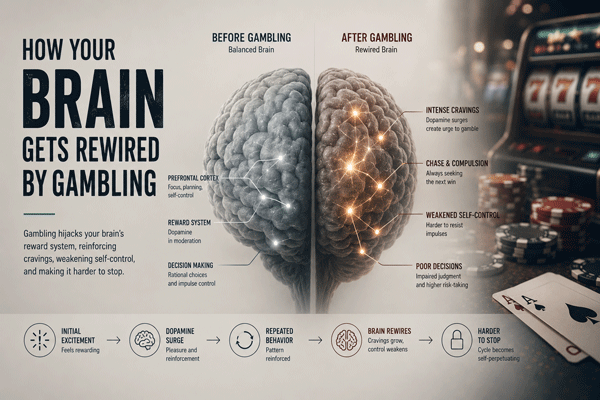
The progression is predictable and devastating:
- Stage 1 - The Hook: Dopamine floods your system. You feel excited and in control.
- Stage 2 - Tolerance: Your brain adapts. You need longer sessions and bigger bets. Shame creeps in.
- Stage 3 - Dependence: Not gambling now causes withdrawal. Gambling becomes a need to feel normal.
- Stage 4 - Full Addiction: You continue despite losing everything. Your prefrontal cortex weakens while reward circuits go into overdrive.
Casinos Deliberately Engineer This Shit
Nothing in a modern casino or app is random.
- Variable Ratio Reinforcement: Rewards come unpredictably - the most addictive schedule known to psychology.
- Rapid Feedback: Spins happen in seconds. Faster cycles = faster addiction.
- Engineered Near-Misses: Programmed to happen often enough to keep you hooked.
- Losses Disguised as Wins: You bet $1 and "win" $0.50. Lights flash, sounds celebrate. Your brain thinks you won.
- Bullshit Bonuses: "100% match!" with 30–50x wagering that forces massive play.
- Time Distortion: No clocks, no windows, sensory overload. You lose hours without noticing.
- Gamification: Levels, achievements, progress bars - turning financial destruction into a fake video game.
Why You're Specifically Vulnerable + The Brutal Human Cost

Psychologist specialized in behavioral addictions with over 8 years of experience helping people with gambling problems in Chile.
LinkedInView profile →Disclaimer: This is neuroscience, not a morality play. The casinos know exactly what they're doing. Now you do too. This article is for informational and journalistic purposes only and does not constitute financial, legal or gambling advice. Gambling carries a significant risk of loss and can be addictive. Gamble only within your means - or not at fucking all.