The Poorest Gamble Away What Little They Have.
Casinos Target Them Relentlessly. This Is Fucking Design.
This isn't coincidence. It's design. The poorest people gamble MORE than anyone else - not because they're stupid, but because they're desperate for quick money, have zero financial literacy buffers, and because gambling is literally engineered to prey on desperation. Casinos and betting companies specifically target poor neighborhoods and vulnerable populations. The industry DEPENDS on extracting money from people who can least afford to lose it.
- In real human terms: A poor household losing even a few hundred dollars a year often means missed rent, skipped meals, or no medicine. The same amount lost by a wealthy household is barely noticed. The poor lose more both proportionally and in devastating real-world impact.
- Casinos and betting operators don't wait for customers - they go where desperation lives and regulatory oversight is weakest.
- Casinos know this cycle. They design for it. They profit from every stage.
- What they say: "We promote responsible gambling." What they actually do: Self-exclusion lists aren't shared. Warnings are microscopic. No real income verification. VIP programs court the biggest losers. Governments don't enforce because of tax revenue (15–40% of gaming revenue) and massive lobbying power. More addicts = more tax revenue and more profits. That's the quiet part nobody says out loud.
The Brutal Statistics: Poverty = Gambling Addiction
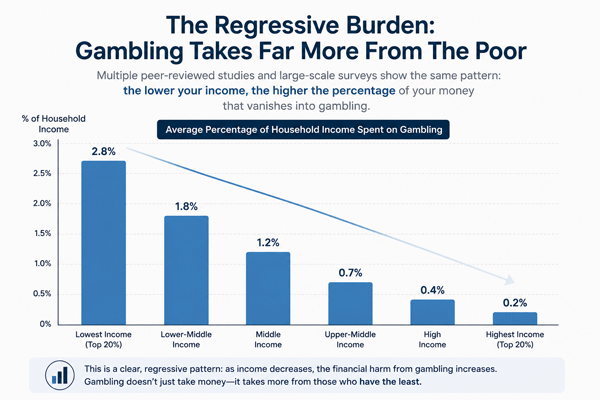
Multiple peer-reviewed studies and large-scale surveys prove a clear, regressive pattern: the lower your income, the higher the percentage of your money that vanishes into gambling.
- Low-income households spend 2.8% of their household income on games of chance, compared to just 0.5% for higher-income households (Gambling Research Exchange Ontario / Hahmann & Matheson, 2017).
- The risk of gambling-related harm increases significantly once spending exceeds 1% of gross family income. Low-income groups routinely cross this threshold.
- Problem gambling prevalence is more than twice as high in the lowest socioeconomic status groups: 11.1% vs 5.1% in higher-SES groups.
- In the poorest U.S. neighborhoods, problem gambling rates reach 11% compared to 5% in the most advantaged areas (University at Buffalo Research Institute on Addictions, 2014).
Why This Shit Happens
The Business Model is Explicit + Targeting the Vulnerable
Problem gamblers and those at risk generate the majority of industry revenue. The World Health Organization states that people gambling at harmful levels generate around 60% of gambling losses/revenue.
A person with $500 to their name losing $10–20 per day is worth far more to the house over months and years than a rich person dropping $10,000 once. The industry knows this. They design for it. They profit from it.
- Physical Placement: Electronic gaming machines and lottery/scratch cards placed in liquor stores, convenience stores (bodegas), and bars in working-class and poor neighborhoods. Alcohol + gambling = impaired decision-making by design.
- Online & Mobile Predation: Smartphone apps with instant deposits (crypto, PIX in Brazil). Minimal KYC. Aggressive targeting of young men in poor communities through sports betting and "influencer" marketing.
The Poverty-Gambling Cycle (Fucking Vicious)
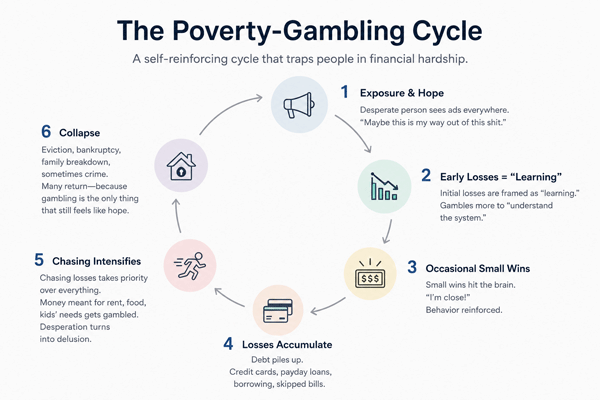
Here's how it actually plays out on the ground, step by brutal step:
- 1Desperate person sees ads everywhere → "Maybe this is my way out of this shit."
- 2Initial losses framed as "learning" → Gambles more to "understand the system."
- 3Occasional small wins → Brain lights up. "I'm close!" Behavior reinforced.
- 4Losses accumulate → Debt → Credit cards, payday loans, family borrowing, skipped bills.
- 5Chasing behavior intensifies → Money taken from rent, food, kids' needs. Desperation becomes delirium.
- 6Collapse → Eviction, bankruptcy, family breakdown, sometimes crime. Many return because gambling is the only thing that still feels like hope.
LATAM-Specific Horror Stories - Where Regulation Is Weak or Dead
The Psychological Exploitation
Chronic poverty creates constant stress that literally impairs decision-making and willpower (neuroscience of scarcity). Layer on top: near-miss effect, variable rewards, sunk cost fallacy + loss aversion, zero financial literacy, and legal "hope" that feels respectable and is heavily advertised.
Industry Doesn't Give A Fuck = Regulatory Failure
What Actually Needs To Happen (But Won't Because It Threatens Profits)
Warning Signs: Are You (or Someone You Know) in the Cycle?
- Gambling to escape stress or "fix" money problems
- Chasing losses after every session
- Using money meant for rent, food, bills, or kids
- Hiding gambling or losses from family/friends
- Tolerance increasing (need more money or time)
- Gambling affecting sleep, work, or relationships
- Set strict time + money limits BEFORE playing
- Use every self-exclusion and deposit limit tool
- If chasing or using essential money → STOP immediately
- Talk to someone you trust
- Seek professional help (Gamblers Anonymous, hotlines)
- Replace the "hope" with real financial steps (even small savings)
- Gamblers Anonymous - local meetings worldwide
- National Council on Problem Gambling (US) or national equivalents
- BeGambleAware (UK) and similar
- Brazil: CVV (188) or SUS addiction services
- Mexico, Argentina, Chile, Peru: Local health ministries or addiction hotlines (many now have gambling-specific programs)
- International: WHO resources on gambling and mental health
- If in crisis: Local emergency services or suicide prevention hotlines
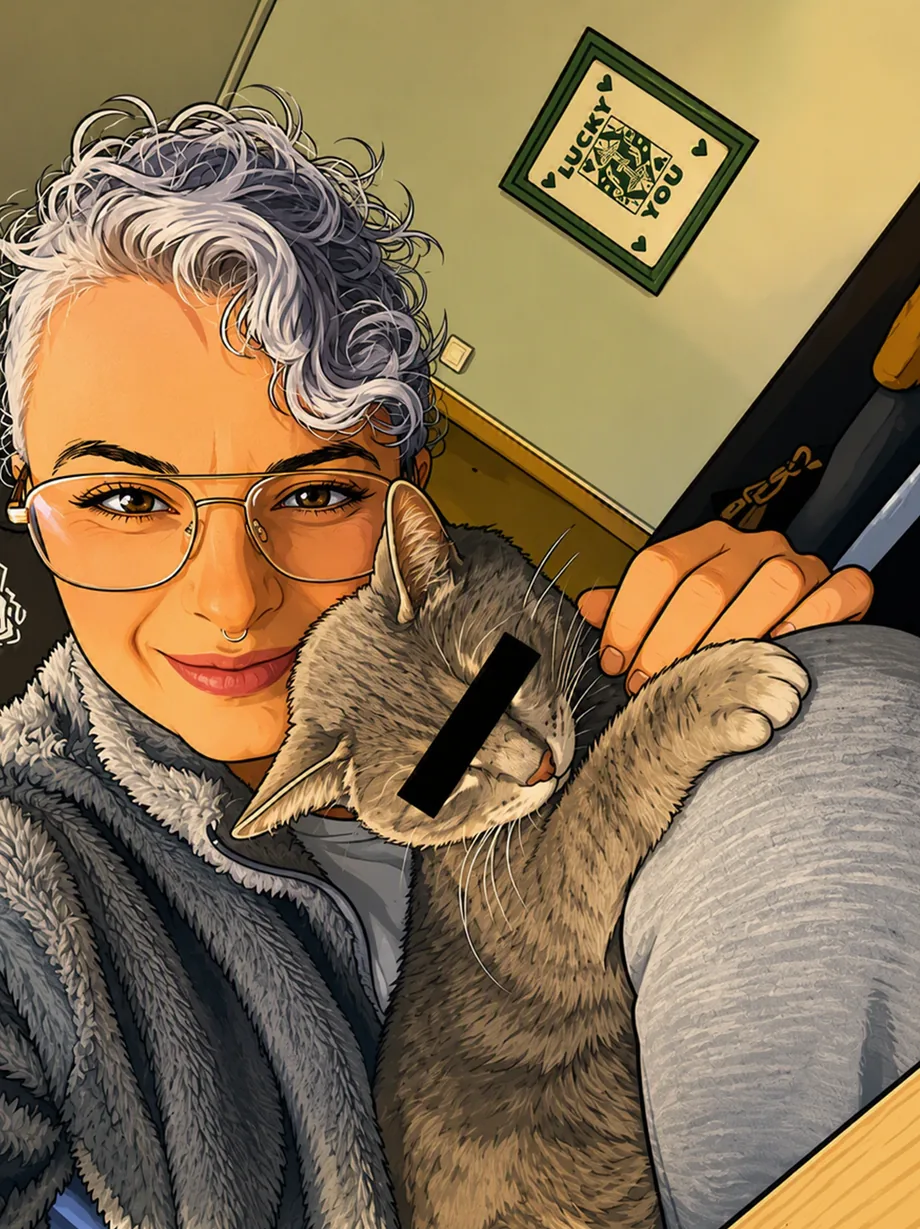
Former problem gambler turned responsible-gambling advocate. Psychology background; reviews only what she'd use with her own money.
LinkedInView profile →Disclaimer: This is investigative journalism and sociological analysis based on peer-reviewed research, government data, and news investigations. It is not financial, medical, legal, or therapeutic advice. Gambling can cause severe harm including financial ruin, mental health crises, family breakdown, and suicide. If you or someone you know is struggling with gambling, please fucking seek professional help immediately.